
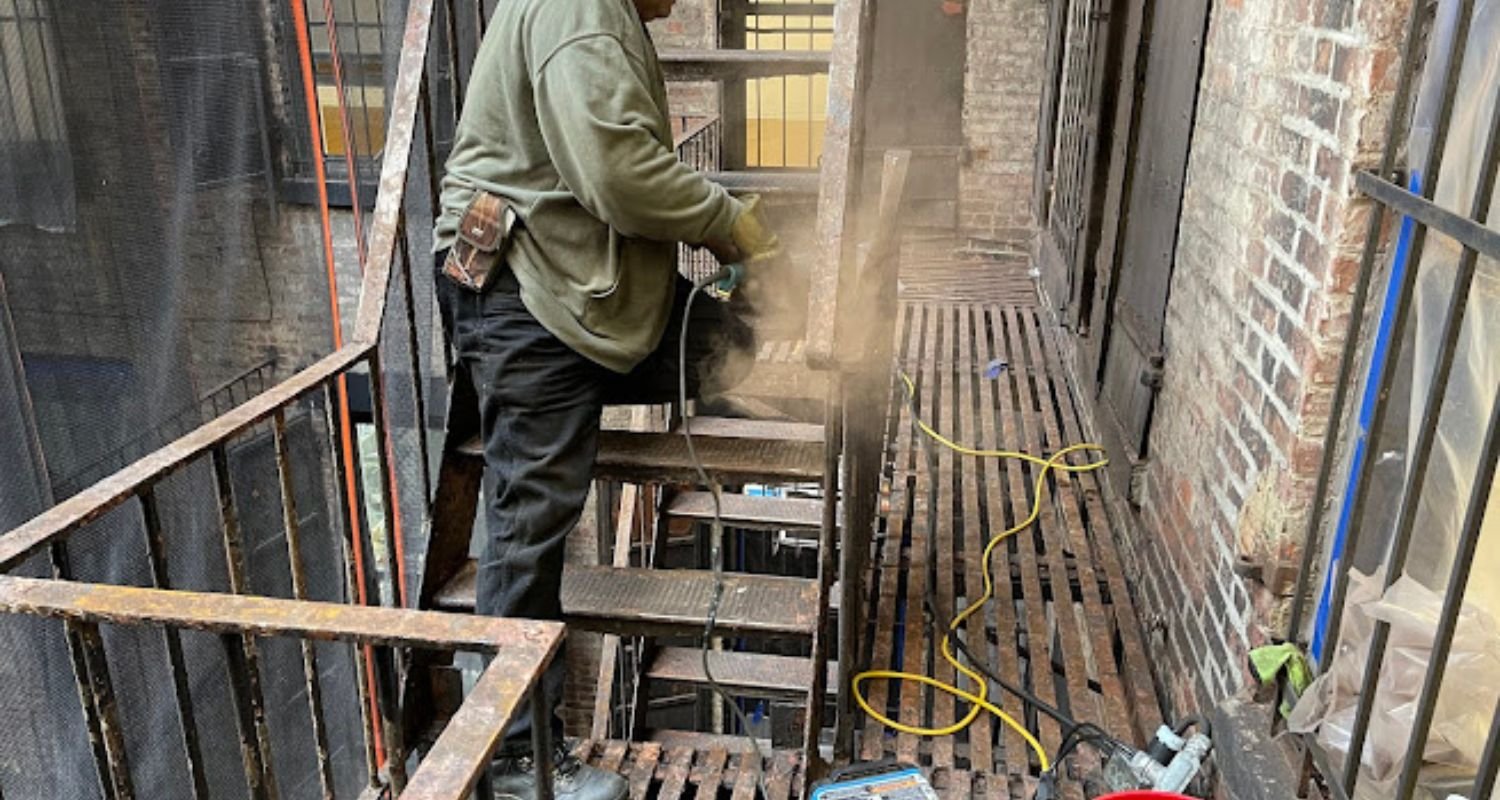
Can a Rusted Fire Escape Be Repaired or Should It Be Replaced?
- Posted On: July 3, 2026
- Posted By: tricerepairs
A rusted fire escape is more than just an eyesore; it can turn into a life-threatening hazard when people need it most. Many property owners think surface rust is harmless, but the corrosion can weaken the steel, wear down welds, loosen key connections, and gradually reduce the structural integrity of the whole system. When you manage a residential, commercial, or mixed-use building, it helps to know when repair work is enough, and when a full replacement is truly needed, because it protects lives, supports compliance, and helps you avoid expensive emergencies later on.
If you are searching for fire escape installation NYC you are probably dealing with an aging escape, visible rust staining, or general worry about building safety. Whether the property is a brownstone, an apartment building, or a commercial site, a good evaluation matters. Professionals look at the type of corrosion, the depth of the damage, and how the unit performs under load, so they can decide if patching and reinforcement will work, or if replacement is the wiser move for the long run.
Why a Rusted Fire Escape Should Never Be Ignored
A fire escape is basically there for one big job, let occupants leave in a safe way during fires or other urgent incidents. When corrosion starts to attack the steel bits, the structure’s ability to carry weight can keep dropping slowly, without you noticing anything really obvious at first.
During an emergency, a lot of people might end up using the same run-down at the same time. And when a beam or connection is even a little weak, that small problem can turn into something disastrous once the load gets high.
Some typical reasons fire escape corrosion shows up include:
- years of being in rain and snow
- salt from winter road treatments
- persistent high humidity
- water trapped between joints
- failing protective paint layers
- maintenance that is not done properly
- inspections that do not happen regularly
If maintenance is delayed, corrosion can move farther into the main structural members, and then the repairs keep costing more as time passes.
How Rust Damages a Fire Escape
Rust is more than a surface annoyance
When steel oxidizes, it tends to lose thickness, and with that it also drops in overall strength. Over time, rust can creep into just about every major part of a fire escape system, and yes it matters even if the damage looks small at first.
Structural Steel
Corrosion eats away at the cross-sectional thickness of steel supports, so they end up weaker when they are under load
Stair Treads
Rusted stair treads can form holes, or the surface can turn slick, which raises the chance of falls
Railings
Handrails that are corroded, or that have gone loose, can fail when someone leans on them for balance
Bolts and Fasteners
Corrosion weakens bolts, anchors, rivets, and welded seams, so connections that once held firmly can become unreliable
Landing Platforms
If water gathers or pools on landing platforms, corrosion speeds up, and the walking surface becomes risky, even when it looks solid enough from a distance.
Warning Signs Your Fire Escape Needs Immediate Attention
Property owners should not ignore these warning signs, not ever:
- Heavy rust scaling
- Flaking metal
- Loose hand rails
- Missing bolts
- Bent stair sections
- Cracked welds
- Sagging landings
- Pooled water
- Peeling paint that exposes bare steel
- Areas that shift when you walk on them
If any of these problems show up, schedule a professional inspection right away.
Can a Rusted Fire Escape Be Repaired?
The real answer depends on how bad the corrosion is, like severity wise.
Most fire escapes that show early-stage rust can still be restored, safely in many cases.
Repairs done by trained pros may cover a mix of things, for example
- Rust removal
- Sandblasting
- Wire brushing
- Steel cleaning
- Welding repairs
- Bolt replacement
- Structural reinforcement
- Primer application
- Protective industrial coatings
- Waterproof sealants
If the corrosion is minor and hasn’t actually compromised structural strength, then it is usually repairable without too much trouble.
When Repair Is the Best Option
Repair is usually a good idea when:
Surface corrosion only
The steel still looks good, it remains structurally sound, with no real measurable reduction in thickness.
Localized deterioration
It seems limited to small areas, just a few sections have gone down.
Solid structural links
Anchors, welds, and supporting brackets are still holding, no big compromise here.
The last inspection checks out
The whole system stays compliant with the relevant building rules.
Preventive care
A routine restoration and minor refastening style work can extend the service life before bigger problems start.
When Fire Escape Replacement Is the Better Choice
Sometimes repairs just aren’t enough anymore.
A full replacement is usually the safest route when corrosion has weakened the core structure of the system.
A complete swap might be needed if
- Main support beams are badly rusted
- Several stair runs have failed
- Landings show real structural harm
- Welds are extensively cracked
- Anchors are pulling away from the building
- Big sections have lost a lot of steel thickness
- The fire escape no longer follows today’s safety requirements
Replacing the whole system removes those unseen structural risks, and it also helps long term dependability.
If Your Fire Escape Fails During an Emergency
A failed fire escape can turn into a real disaster, and yeah, it can happen more than people expect.
Some obvious dangers include, serious injuries, fatal falls, and then there is delayed evacuation. You can also see higher numbers of fire related victims, plus issues like property owner liability and insurance complications. On top of that, building code violations can come up, and later legal claims too.
Now picture residents trying to get out during a nighttime apartment fire. If the rusted stairs give way under the combined weight of several occupants, the emergency escape route becomes impossible to use, just when every second matters and everyone is already stressed.
This is why preventive maintenance and a timely swap-out are crucial, not something to ignore.
Professional Fire Escape Inspection Process
A professional inspection typically includes some of this, like a quick but thorough look:
Visual Examination
Inspectors will check
- Rust
- Paint failure
- Drainage
- Stair alignment
- Railings
Structural Assessment
Engineers then evaluate
- Steel thickness
- Load-bearing members
- Connections
- Weld integrity
- Fasteners
Load Testing
If it makes sense for the condition, load testing confirms the building can safely hold occupants.
Documentation
A detailed inspection report usually identifies
- Existing defects
- Suggested repairs
- Maintenance priorities
- Replacement recommendations
Repair vs. Replacement Comparison
| Factor | Repair | Replacement |
|---|---|---|
| Cost | Lower initially | Higher upfront |
| Structural Life | Moderate extension | Long-term solution |
| Downtime | Minimal | Longer installation |
| Safety | Good if damage is minor | Highest safety level |
| Maintenance | Ongoing | Reduced initially |
| Compliance | Depends on condition | Meets current standards |
Typical Costs of Repair vs. Replacement
Actual pricing shifts based on the building size, ease of access, how intricate the design is , and how widespread the corrosion has become.
Approximate ranges are below
Minor Rust Repairs
- Cleaning
- Rust removal
- Repainting
- Bolt replacement
These are usually the lowest cost maintenance option, generally speaking.
Moderate Structural Repairs
- Welding
- Reinforcement
- Partial stair replacement
- Landing repairs
This is a mid-range investment, depending on what damage is showing up.
Complete Replacement
Cost depends on several inputs, such as:
- Building height
- Number of platforms
- Material requirements
- Engineering services
- Fabrication
- Installation complexity
- Permit requirements
Even if replacement costs more at the start, it often trims future upkeep expenses.
Common Mistakes Property Owners Make
Avoid these costly mistakes, before they start cascading.
Waiting Until Rust Becomes Severe
Small repairs start turning into major structural replacements, then it’s usually too late.
Painting Over Rust
Covering rust without removing it, traps corrosion underneath. That surface finish can look good, while the problem grows.
Ignoring Loose Railings
Loose railings often mean there is deeper structural trouble. If the handhold shifts, the frame may already be compromised.
Hiring Unqualified Contractors
Improper repairs, even with “quick” fixes, can create real safety hazards. Skilled assessment matters.
Skipping Routine Inspections
Regular checks catch problems before they become dangerous. A simple review can prevent expensive replacement.
Conclusion
A rusted fire escape should not just be brushed off as a “look only” matter. Even when the minor corrosion can be handled with professional restoration, heavy rust that starts to threaten structural strength usually calls for replacement. The proper choice really comes down to a careful inspection, how far the damage goes, and the lasting safety of the people inside your building.
If you’re considering Fire Escape Installation NYC, or you worry that a rusted fire escape may no longer provide dependable protection, don’t wait until an emergency uncovers hidden structural problems. Schedule a professional inspection, deal with corrosion early, and put your money into repairs or a full replacement so your building stays safe, dependable, and ready exactly when it matters most.