
Impact of Climate Change on Fire Escape Maintenance & Painting Needs in NYC
- Posted On: May 1, 2026
- Posted By: tricerepairs
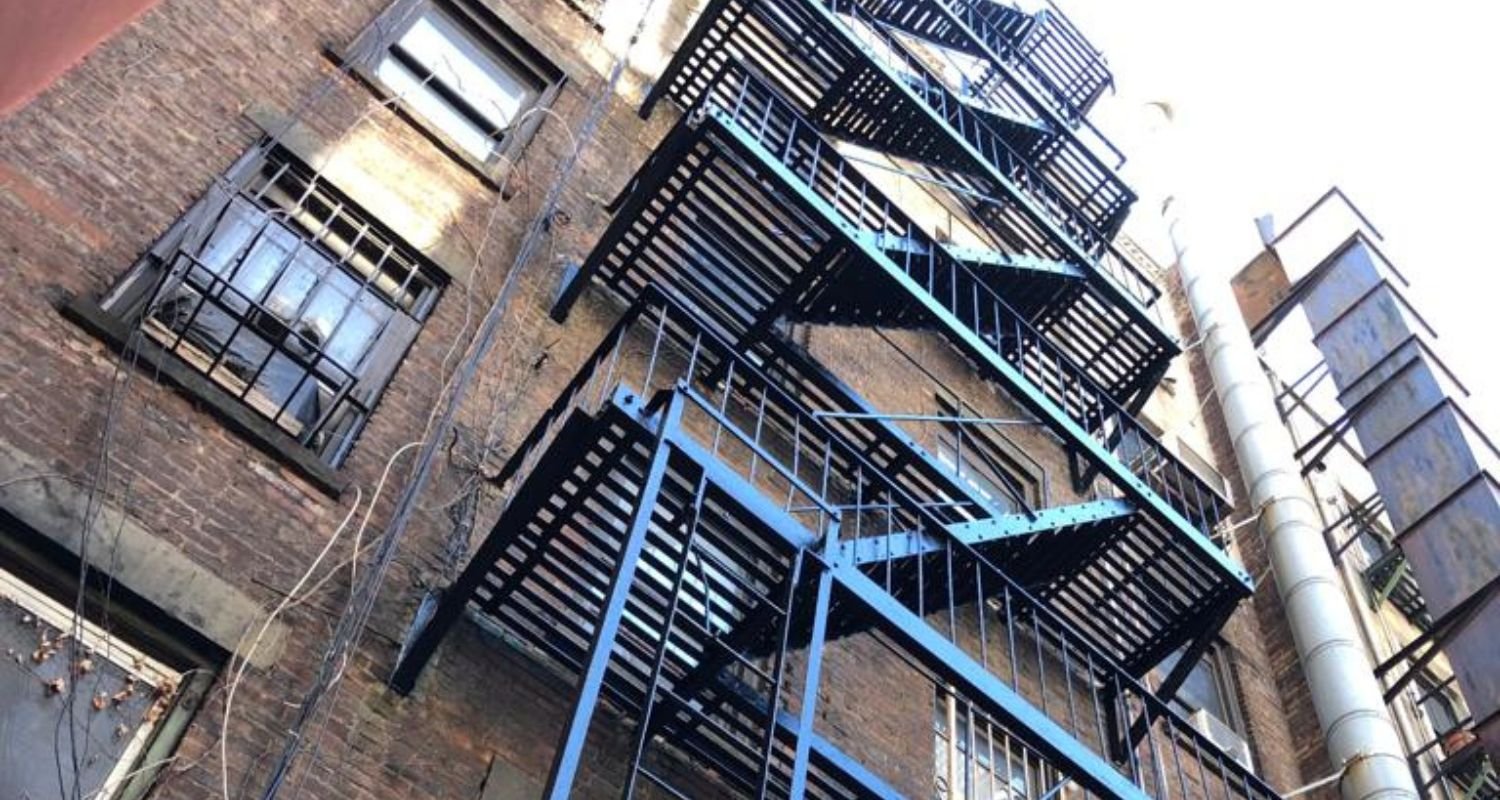
The ever-famous New York City skyline is not only recognizable because of the skyscrapers, but also because of the steel fire escapes draped over the buildings. These installations have been a vital safety design enabling fast evacuations during such emergencies as fires and an array of other disasters. Over time, however, there has been an insidious encumbrance that began to deplete these provisions which is saying, to a great extent, climate change.
With more heat, more moisture, more rain and storms, such factors work to weaken the fire escapes faster than many past decades. The same homeowners who used to schedule yearly repairs and upkeep, are now left with a few years of these serviceable parts.
Such an occurrence has made the practice of fire escape painting NYC and fire escape maintenance NYC paramount not just in meeting the standards, but for protection. Because if a Fire Escape Fails During a Time of Need, it results in devastating effects.
How Climate Change Is Affecting Fire Escape Structures
Climate change is not just an environmental issue, it’s a structural one. Fire escapes, being fully exposed to the elements, are among the most vulnerable components of any building.
Rising Temperatures and UV Exposure
Heat is the cause of metals (in expansion and contraction), which is induced in the comparatively prolonged exposure to it—this confrontation of under sophisticated thermal, which breaks even some of the possibly embrittled protective surfaces. This sets up the stage, however, of micro-cracks for the paint layers. When the protective cover is compromised, the now open steel surface is exposed to a perfect mixture of oxygen and moisture-constituting the ideal space for corrosion.
Additionally, stronger ultraviolet (UV) radiation breaks down paint faster, reducing its protective lifespan. What once lasted 5–7 years may now degrade in just 2–4 years.
Increased Rainfall and Humidity
New York City has experienced a notable increase in rainfall intensity and humidity levels. Moisture is the primary cause of corrosion. In the presence of water and oxygen, steel will oxidize; hence, it rusts.
Fire escapes having flat surfaces for water collection are the places where water generally collects due to the union of joints, stairs, and railings; hence, these water-logging locations are prone to corrosion and weaken structurally over time.
Extreme Weather Events
Snow tempests and slight jerks of the freeze and frost further speed up the deterioration. As the watery attenuates to this minuscule gap, then freezes, contracting even further opens up more diminution of integrity to the structure. High wind and heavy wind-storms, too, can help to shakily shake apart and loosen those frail connections.
Why Fire Escapes Are More Vulnerable Than Ever
Fire escapes are continually exposed to environmental stress compared to other internal structural components. They combine the following:
- Air pollutants, which catalyze oxidation
- Coastal exposure to or deposition by salty air (more pronounced in NYC)
- Temperature variation
- Continuous exposure to moisture
All the effects aggravated with climate change now function in unison. Why then does this mean quicker corrosion, costlier maintenance, and higher risk to safety?
Corrosion challenges that affect steel structures in the cities are significant; yet, under climate change, those challenges are immensely exacerbated. Fire escapes cannot afford such degradation, being vital safety apparatuses.
Is My Fire Escape Rusting? Key Warning Signs
Most of the time, landlords choose not to pay attention to signs of impending damage until they have no other choice to do so. Is there a question, “Is My Fire Escape Rusting? Which Are the Indicative Evidences?”
- Peeling or bubbling paint – A sign that moisture has penetrated the coating
- Visible rust patches – Early-stage corrosion that can spread quickly
- Flaking metal surfaces – Indicates deeper structural damage
- Loose bolts or railings – Structural weakening due to rust expansion
- Water pooling on surfaces – Leads to continuous corrosion
This was the case because rust is not a simple unsightly feature, it is able to create and grow in size and thereby break and force the metal. In the course of a few years, such a structure will become obsolete.
Fire Escape Fails During an Emergency – The Real Danger
Fire-escapes must always be in working condition. But it’s unfortunate that the risk of such structures collapsing is increasing because of climate-induced corrosion.
Rust can lead to the following scenarios:
- There is decreasing load-bearing capacity
- The metal becomes fragile and breaks easily
- Joining components become weak, destabilizing the structure
Sometimes there may be a fire situation where multiple people may require the usage of a fire escape at the same time. There is however a possibility that the structure, if corroded, may not be able to support the weight.
And this is more dangerous than we can imagine: The fire escape fails during an emergency and what should have been a life-saving structure turns into a dangerous disaster towards the occupants.
Why Fire Escape Painting NYC Is More Important Than Ever
Coatings that are protective are necessary in the desire to prevent degradation of materials from the impacts of the external. With the present changing weather conditions, fire escape painting NYC is no longer a condition that is up to the willing but rather a necessity.
Uses of Painter Services:
- Corrosion control: Painting prevents moisture and air from reaching the metal and causing rust.
- Increases the use of structures: Application of appropriate coatings enables the structure or any component to serve over a long period.
- Maintains Order: Any Fire Escapes Within the City of New York Must be in Usable, Safe and Well-Painted Condition.
- Increases safety: Shelters the escape routes in case of an emergency.
The latest generation of coatings can withstand harsh environments including, but not limited to, elevated levels of humidity and high- energized light. Despite such effective tactics, the coating needs the skill of a professional application to stay and perform well.
Fire Escape Maintenance NYC – Adapting to Climate Change
The strategies of routine maintenance need to change as the environment changes. Proactive measures are now needed for Fire Escape Maintenance NYC.
The following changes in maintenance practices have been noted:
- The frequency of inspections: inspection cycle is once or twice a year, rather than every several years
- Frequency of painting: short frequency on its painting in view of coating destruction coating process
- Immediate intervention in terms of corrosion: And that within the structure
- Structural health monitoring: in order to check their load carrying capacity
It is not about mere compliance anymore, but keeping up with these unprecedented changes.
Climate Change vs Fire Escape Lifespan
| Factor | Past Conditions | Current Conditions |
|---|---|---|
| Rust formation | Slow | Rapid |
| Paint lifespan | 5–7 years | 2–4 years |
| Maintenance frequency | Low | High |
| Structural risk | Moderate | High |
This comparison clearly shows that climate change is accelerating deterioration and increasing maintenance demands.
Why NYC Buildings Are at Higher Risk
New York City brings about a convergence of odd risks factors:
- Coastal air humidity: Salt in the air speeds up metal corrosion
- High pollution levels: Chemical pollutants react on metal surfaces
- Dense urban environment: Trapped moisture through lessened airflow
- Aging infrastructure: Many existing fire escapes date back ages
Collectively, these various factors combine to form a perfect storm for expedited structural damage.
How to Protect Your Fire Escape
Preventive action is the most cost-effective and safest approach. The property owners ought to:
- Schedule regular inspections
- Invest in high-quality anti-corrosion coatings
- Address rust immediately
- Hire experienced professionals for painting and repairs
- Maintain proper drainage to prevent water accumulation
Taking these precautionary measures against deterioration will guarantee the extended life of your fire escape, and the safety of all your tenants.
When to Call Experts for Fire Escape Maintenance NYC
Professional assistance is a quick necessity whenever you notice:
- Evident corrosion or rust.
- Peel-off or damaged paint.
- Loose, shaking or unstable components.
- Signs betraying structural weaknesses.
- Upcoming compliance inspections.
Postponement of maintenance will eventually enable higher tariffs, of course, but above all, it will increase safety risk.
Conclusion: Climate Change Is Reshaping Fire Escape Safety
Climate change is already being factored into the equation; it is affecting the safety of crucial structures like fire escapes. With increased humidity, extreme weather patterns, and rising temperatures intensifying corrosion and shortening the lifespan of protective coatings.
For property owners in NYC, this means one thing: proactive maintenance is essential.
If preventive measures are ignored, this may lead to the most unfavorable structural breakdown. Allocating the budget for Fire Escape Painting NYC and Maintenance NYC is more than about undergoing standards as it is very crucial to save human life.
Because there are no compromises when it comes to emergencies.
If you feel there may be any impairment or to avoid bearing an arm and a leg to have it fixed, then there’s no better time than this moment. Book yourself an expert inspection and rest assured your fire escape is functional when needed, for safety waits for no delays.